Book your place here
Directions and Travel Information
Programme
Abstract Booklet
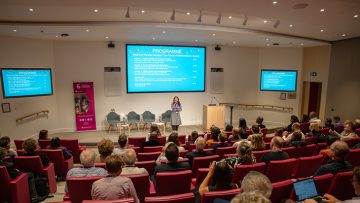
Join us in the heart of historic Cambridge for the inaugural IMA Mathematics Anxiety International Conference. This global event will bring together researchers, educators, practitioners, publishers, and policymakers to explore the complex and timely issue of mathematics anxiety.
About the Conference
This conference aims to foster interdisciplinary dialogue and collaboration across fields such as education, psychology, behavioural science, and sociology. Whether you are an early-career researcher or an experienced academic, this event offers a platform to share insights, research, and strategies for addressing mathematics anxiety in diverse contexts.
Conference Themes
We welcome submissions on a wide range of topics, including:
- Mathematics anxiety as reported by:
- University students (especially non-specialists)
- Learners aged 5–18
- Individuals in everyday life
- Across cultural and policy contexts
- Related forms of anxiety such as:
- Test anxiety
- Spatial anxiety
- Generalised anxiety
- Dimensions and typologies of mathematics anxiety:
- Affective, cognitive, and physiological components
- Gender differences and stereotypes
- Neurodiversity and learning difficulties
- Resilience and coping strategies
- Psychological and sociocultural constructs linked to mathematics anxiety:
- Working memory, number sense, and spatial thinking
- Home and family influences (e.g. caregiver anxiety, home learning)
- Educator perspectives and preparation
- Equity, diversity, and inclusion in mathematics education
- Interventions and support strategies:
- Socio-emotional and content-based approaches
- Pedagogical innovations and instructional methods
- Technology-enhanced and AI-supported solutions
Invited Speakers
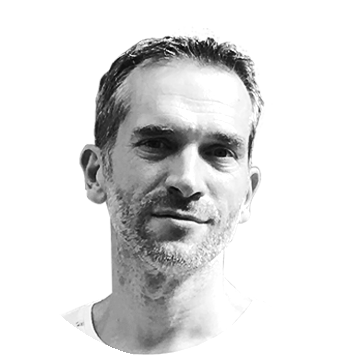 Professor Dénes Szűcs is Professor of Cognitive Neuroscience and Psychology at the University of Cambridge, United Kingdom. He is deputy director of the Centre for Neuroscience in Education at the Department of Psychology at Cambridge and is an official fellow of Darwin College, Cambridge. Szucs is Senior Fellow in the Science of Learning at UNESCO, United Nations, he has held various research grants from UK, European and USA funders. Szucs was the recipient of the James S McDonnell Foundation Scholar Award and was elected as Fellow of the Association for Psychological Science (USA) and Academia Europaea (UK/EU). His research concerns mathematics development, mathematics anxiety, cognitive electro- physiology, the replicability of biomedical science and the misuse of statistics in biomedical science.
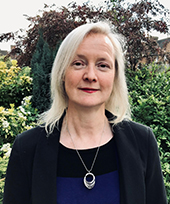 Dr Ros McLellan is an Associate Professor in the Faculty of Education, University of Cambridge, and a psychologist with a background in secondary teaching. She is Co-I on a Leverhulme-funded project ‘Transforming Secondary Mathematics Learning through Storytelling’ and has conducted a number of projects examining young people’s wellbeing, including a previous project on maths anxiety. She has co-edited a major volume ‘Wellbeing and Schooling’ with colleagues from the EERA health and wellbeing education network. She is currently Chair of BERA’s Publication Committee.
 Dr Sweta Adatia is a highly accomplished neurologist, educator, and author based in Dubai, UAE. She holds an MBBS and MD in Internal Medicine, a DNB in Neurology, an MBA from theUniversity of Cambridge (with scholarship), and the Fellowship of the American College of Physicians (FACP). She has received over 13 gold medals in various subjects during her academic career.
She currently practices at Gargash Hospital, Dubai, and has made significant contributions to stroke care, migraine management, and integrative brain-health programs that bridge science and spirituality.
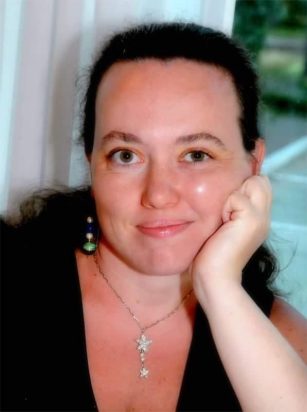 Veronica Cavicchi is a Mathematics and Physics teacher at Liceo Scientifico ‘Annibale Calini’ in Brescia (Italy) and a member of the Italian Ministry of Education’s Territorial Training Team, supporting schools in digital innovation and STEM education. Her work connects mathematics education, educational technology and psychology, with a focus on mathematics anxiety, motivation and student wellbeing. She designs hands-on learning experiences using modelling, robotics, coding, data science and AI, and delivers teacher training on inclusive, future-oriented STEM practices. She is a Scientix Ambassador, CERN ITP Focal Point and a European Climate Pact and Euclipa Ambassador, and she is currently studying Psychology. At the IMA Mathematics Anxiety International Conference, she will share evidence-informed classroom strategies to recognise and reduce maths anxiety through inclusive teaching, metacognitive routines and reflective practice.
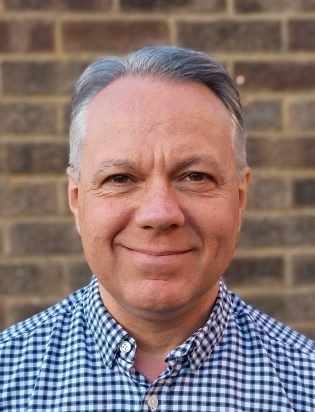 Professor Neil Spencer is Professor of Applied Statistics and Head of the Business Research Unit and Statistical Services and Consultancy Unit at the University of Hertfordshire. He holds Chartered Statistician status, is a Fellow and Council Member of the Royal Statistical Society and is a Fellow of the Academy of Social Sciences. Neil’s academic career of more than three decades includes extensive experience in teaching and coordinating training in statistical methods, alongside research and consultancy work spanning a wide spectrum of academic and applied fields.
Call for Papers and Posters – NOW CLOSED
Prize
There will be a prize and certificate awarded for the best poster presentation
Conference Fees
Full Conference Pass (2.5 days)
Includes your entry to the conference for all days as well as refreshments and lunches. Does not include conference dinner.
IMA Member £345.00
Non-Member £385.00
Student IMA Member £260.00
Student Non-Member £285.00
Full Conference Pass (2.5 days) WITH Conference Dinner
Includes your entry to the conference for all days as well as refreshments and lunches. Includes conference dinner.
IMA Member £430.00
Non-Member £470.00
Student IMA Member £345.00
Student Non-Member £370.00
One Day Conference Pass
Includes your entry to the conference for one day as well as refreshments and lunches. Does not include conference dinner.
IMA Member £180.00
Non-Member £200.00
Student IMA Member £130.00
Student Non-Member £150.00
Half-Day Conference Pass
Includes your entry to the conference on 2nd July as well as refreshments and lunches. Does not include conference dinner.
IMA Member £108.00
Non-Member £120.00
Student IMA Member £78.00
Student Non-Member £90.00
Conference Dinner at Murray Edwards College, 1st July – £85
Includes three course dinner
Directions and travel information to Murray Edwards College can be found here
Please register for the conference via:
https://my.ima.org.uk/
Accommodation
Murray Edwards College
Directions and travel information to Murray Edwards College can be found here
Discounted rates
Single ensuite B&B £85.00 + VAT; Twin ensuite B&B £130.00 + VAT
Book here, using code ANXIETY before selecting arrival / departure dates and room type.
You will receive an email from SpeedyBooker confirming your booking
Organising Committee
Chair: Dr Meena Mehta Kotecha, PhD (Cantab), CMath, Fellow (RSS), FHEA, London School of Economics and Political Science
Co-Chair: Dr Lindsey Compton SFHEA, University of Birmingham
Co-Chair: Professor Theo Gilbert, University of Hertfordshire
Dr Mark Hodds, Coventry University
Dr Gerardo Ramirez, Ball State University
Professor Hugh Jones, University of Hertfordshire
We have been made aware of unsolicited offers of sponsorship to attend IMA Events; None of these are affiliated with IMA, and appear to be scam or phishing attempts targeting academics.
Please note that any emails from conferences will be sent out from ima.org.uk email addresses. If you’re unsure if they’re authentic, please email conferences@ima.org.uk